
Getting to the Airport with a Scooter: How Wheelchair and Scooter Users Can Reach the Terminal
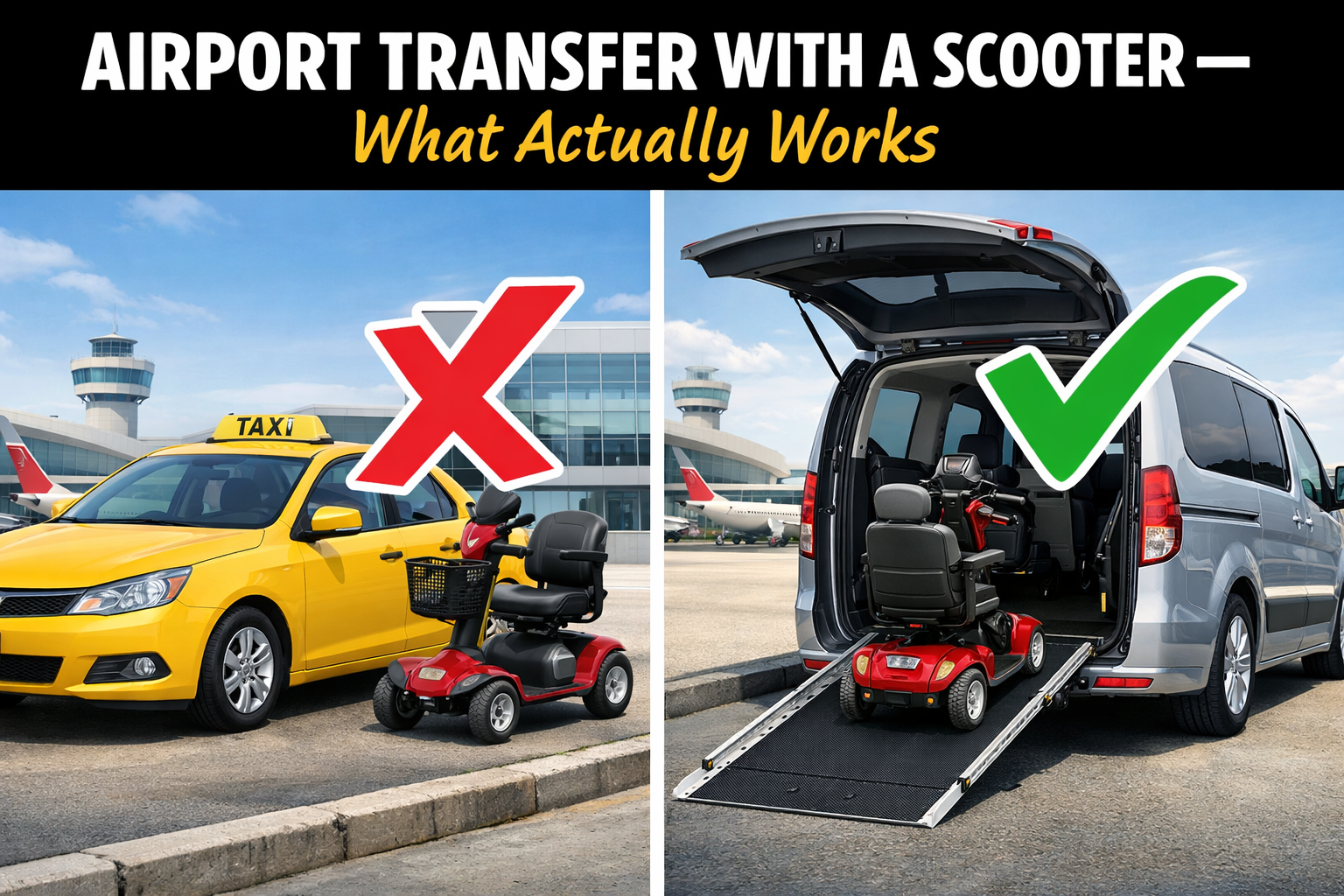
Getting to the Airport with a Scooter: How Wheelchair and Scooter Users Can Reach the Terminal Safely and Stress-Free
Hey everyone, Andy Wright here from Andy Wright Travel! After more than 10 years' worth of flights in my power scooter, I can tell you that the journey to the airport is often more stressful than the flight itself. Most people assume you just hop in a taxi or jump on the train, but when you rely on a mobility scooter or wheelchair, things get complicated fast — especially if your device doesn’t fold neatly or if the vehicle isn’t properly accessible.
In this guide, I’ll walk you through the real-world options for getting to the airport with a scooter or wheelchair, complete with pros, cons, practical tips, and the questions you must ask before you book anything. This is the advice I give every viewer who messages me about pre-flight logistics.
1. Pre-Booking: The Questions You Need to Ask
Never assume a vehicle is accessible just because the company says so. Always call or email in advance and be specific:
- Can my scooter/wheelchair fit inside without being dismantled?
- What are the exact dimensions and weight limits of the vehicle’s accessible space?
- Is there a proper ramp or lift (not just a portable one that staff “will help with”)?
- Is the driver trained in assisting wheelchair users?
- Do you have a dedicated wheelchair-accessible vehicle (WAV) or just a regular taxi with a fold-down ramp?
For power scooters and heavy chairs, always state the make, model, battery type, and whether it’s foldable or rigid.
2. Option by Option: What Actually Works in Practice
Private Wheelchair-Accessible Taxi / Transfer Service. This is usually my top recommendation. A proper WAV has a rear or side ramp/lift and tie-down points for your scooter. Pros: Door-to-door, flexible timing, driver helps with loading. Cons: More expensive than regular taxis. Tip: Companies like Airport Accessible Transfers or local equivalents (search “[your city] wheelchair taxi airport”) often have vehicles that can take larger scooters. Book at least 24–48 hours ahead. I always send photos of my chair in advance.
Regular Taxis & Ride-Sharing Apps Uber, Bolt, or local taxis sometimes claim “accessible” vehicles, but many are just regular cars with a small boot. Red flag: If they say “we can fold it” but your scooter doesn’t fold easily or has a non-removable battery — walk away. I’ve had drivers refuse my chair at the kerb because it wouldn’t fit. Always confirm the exact vehicle type when booking.
Airport Bus or Coach Services Many major airports run accessible buses from the city centre. Pros: Cheaper than taxis. Cons: Limited space, strict size limits, and you may have to wait for the next bus if your scooter is too big. Some require advance booking for the ramp. Tip: Check the operator’s website for exact dimensions allowed. In London, for example, Heathrow Express buses have space for one wheelchair/scooter per journey.
Train or Metro Trains can be excellent if the station and carriage are step-free. Pros: Often spacious and reliable. Cons: Getting from home to the station might still need a taxi. Some trains have limited wheelchair spaces that must be reserved. My experience: In Europe, many high-speed trains have dedicated accessible areas, but you usually need to book the specific wheelchair spot in advance.
Hotel Airport Shuttle. If you’re staying near the airport the night before, ask about their shuttle. Warning: Many “accessible” shuttles are actually small vans with steep ramps or limited turning space inside. Always ask for dimensions and whether they can accommodate your specific scooter.
Private Hire or Specialist Accessibility Transfer Companies. These are gold for complex journeys. They often use larger vehicles with hydraulic lifts and experienced drivers. Tip: Look for companies that specialise in disabled travel — they understand IATA battery rules and know how to secure your chair safely.
3. Practical Tips from Someone Who’s Done It Dozens of Times
- Timing is everything — Add at least 60–90 extra minutes to your airport arrival plan. Loading and unloading a scooter takes time.
- Battery check — Make sure your scooter is charged but not fully if it’s a long transfer (follow the IATA guidance I covered in my previous battery article).
- Protect your device — Use a rain cover or protective bag if there’s any chance of weather exposure while loading.
- Have a backup plan — Know the contact number for the airport assistance team in case your transfer falls through.
- Documentation — Carry a printed sheet with your scooter’s dimensions, weight, and battery details. It speeds things up enormously.
Red flags to watch out for:
- Companies that say “we’ll just put it in the boot” without seeing your scooter.
- Drivers who turn up in a standard car despite your booking.
- Services that charge extra “for assistance” without clear, accessible features.
4. Airport Arrival: What Happens Next
Once you reach the terminal, head straight to the designated assistance point or use the airport app to request help. Most major airports have excellent teams, but they still need time to meet you at the kerb. I always message the assistance desk with my flight details and estimated arrival time at the terminal.
Final Thoughts from the Road
Getting to the airport with a scooter or wheelchair doesn’t have to be a nightmare. With the right questions, the right booking, and a bit of extra planning, you can start your trip relaxed instead of stressed. The key is never assuming — always verify.
If you’ve had a great (or terrible) airport transfer experience, drop it in the comments. I read every story and often turn the best ones into vlog episodes.
Safe travels, smooth transfers, and see you at the gate, Andy Wright, Wheelchair traveller, accessibility vlogger, and the guy who’s checked in more scooters than most people have flights.