
Power & Charging: International Voltage, Adapters and Charging Your Scooter or Wheelchair
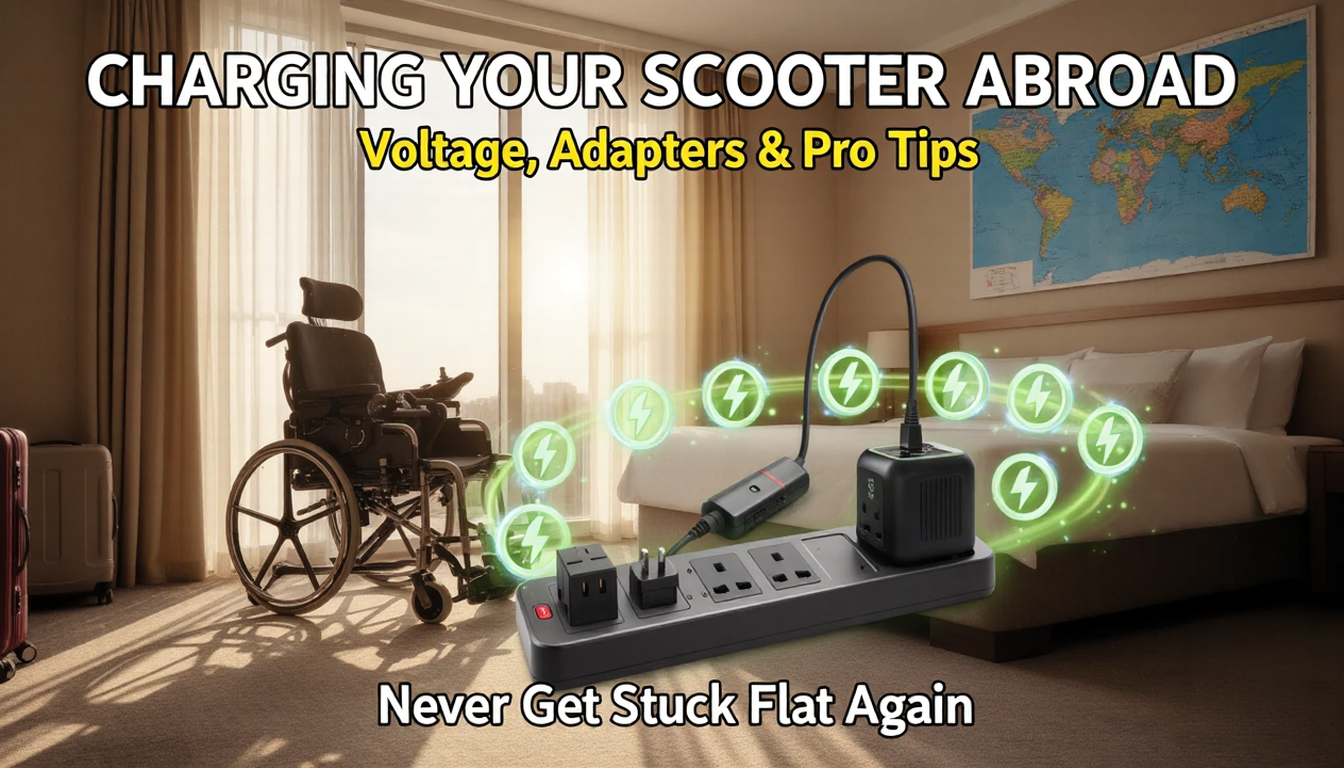
Power & Charging: International Voltage, Adapters and Charging Your Scooter Batteries When Travelling Abroad
Hey everyone, Andy Wright here from Andy Wright Travel!
One of the biggest surprises for first-time international travellers who use a mobility scooter or power wheelchair is just how complicated charging can become once you leave the UK. I’ve learned this the hard way — from nearly frying my charger in a US hotel to hunting for the right adapter at 2am in Bangkok.
In this comprehensive guide, I’ll break down everything you need to know about international voltage, plug types, safe charging, and practical solutions that actually work on the road.
Understanding International Voltage & Why It Matters
- UK & Europe: 220–240V, 50Hz
- USA, Canada & parts of South America: 110–120V, 60Hz
- Australia & New Zealand: 220–240V, 50Hz
- Japan: 100V, 50/60Hz
- Many Asian & African countries: Mixed voltages (often 220–240V but unstable)
Most modern mobility scooters and powerchair chargers are dual voltage (100–240V). This is the single most important thing to check on your charger. If it says “Input: 100-240V” then you only need a plug adapter, not a voltage converter.
If your charger is single voltage (e.g. only 230V), you must use a proper step-down voltage converter (transformer), or you risk damaging your expensive charger and battery.
Plug Types Around the World
- UK: Type G (3-pin rectangular)
- Europe: Type C & F (2-pin round)
- USA/Canada: Type A & B (2 or 3 flat pins)
- Australia: Type I (angled flat pins)
- Thailand, Italy, Israel, etc.: Often mixed sockets
My Recommendation: Buy a high-quality universal travel adapter that covers UK, EU, US, AU, and at least 150+ countries. I personally use and recommend the EPICKA Universal Travel Adapter or Tessan Universal Adapter — both have built-in USB ports, which is extremely useful.
Andy’s Essential Charging Kit for Wheelchair & Scooter Users
- Universal Travel Adapter (with surge protection and USB-C/USB-A ports)
- High-wattage Voltage Converter (if your charger isn’t dual voltage) — minimum 500W–1000W rating
- Portable Power Station (e.g. EcoFlow River 2 or Jackery models under 1000Wh — check airline rules)
- Long extension cable (at least 3–5 metres) — hotel sockets are often in awkward places
- Multi-socket power strip (UK + EU versions)
- Solar charger panel (great backup for multi-day trips or festivals)
Hotel Charging Hacks That Actually Work
- Ask for a room with a full-power socket (not just the low-power USB or shaver sockets often found in bathrooms).
- Many hotels in Asia and the Middle East have hairdryer sockets (usually 220–240V) that can be used with an adapter.
- Never charge unattended overnight if possible — lithium batteries can overheat.
- In countries with unstable power (India, parts of Southeast Asia, and Africa), always use a surge protector.
Battery Care When Travelling
- Keep your scooter battery between 30%–70% for flights (follow IATA rules).
- Charge to 100% the night before long journeys.
- Avoid letting the battery drop below 20% regularly — it shortens lifespan.
- In hot countries (Thailand, Spain, Florida), avoid charging in direct sunlight or extreme heat.
- In cold countries, let the battery warm up to room temperature before charging.
Common Mistakes to Avoid
- Using cheap no-brand adapters or converters — they overheat and can be dangerous.
- Assuming all hotel sockets are reliable.
- Forgetting that some cruise ships and older hotels still use 110V even in Europe.
- Packing only one charger — always carry a spare.
Country-Specific Tips
- USA: You’ll need a Type A/B adapter + voltage converter if your charger isn’t dual voltage.
- Europe: Usually, just a Type C/F adapter is enough.
- Thailand & Southeast Asia: Sockets are often a mix — bring both UK and EU pins. Power cuts are common.
- Australia: Type I adapters needed.
- Japan: 100V only — voltage converter almost always required.
Final Advice from 180+ Flights
A good charging setup adds roughly £80–£150 to your travel budget but gives priceless peace of mind. Test your entire kit at home before you leave — there’s nothing worse than discovering a problem on day one of your holiday.
If you’ve discovered any brilliant charging solutions or had any horror stories abroad, share them in the comments below. I read every single one!
Safe travels and keep those wheels charged, Andy Wright, Wheelchair traveller, vlogger & accessibility advocate