
Travel Insurance Guide: Finding the Right Cover
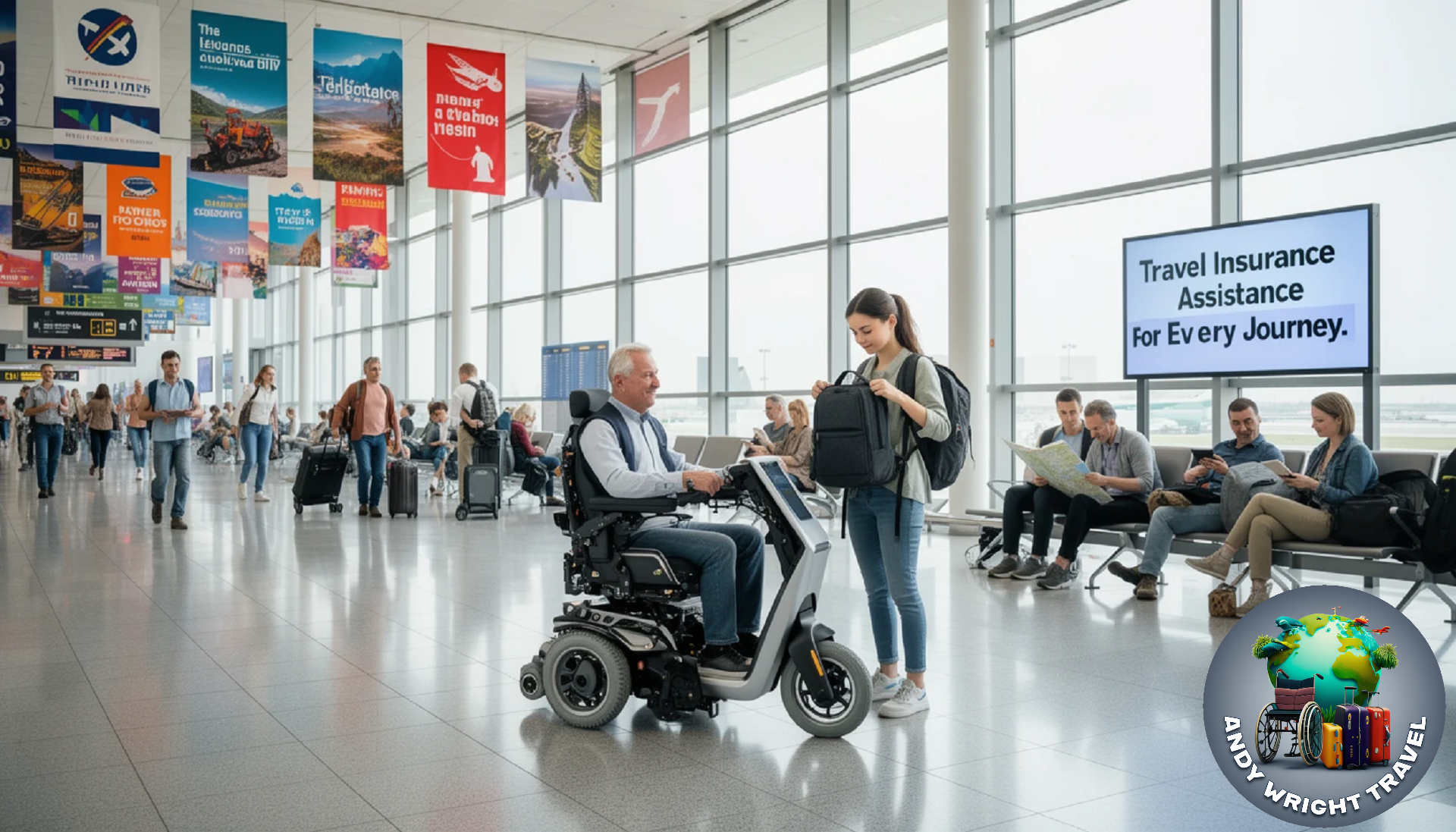
Travel Insurance Guide: Finding the Right Cover for Mobility Scooters, Wheelchairs & Pre-Existing Health Conditions
Hey everyone, Andy Wright here from Andy Wright Travel — your wheelchair-using accessibility vlogger who’s flown, trained, and cruised across five continents with a power chair.
One of the most common questions I get in the comments and DMs is: “Andy, what travel insurance actually covers my mobility scooter or wheelchair and my pre-existing medical conditions?”
It’s a fair question. Standard travel insurance often falls short for disabled travellers, and the wrong policy can leave you thousands of pounds out of pocket if something goes wrong. After years of trial and error (and one very expensive lesson in Thailand), I’ve put together this practical guide to help you find proper cover.
Why Standard Travel Insurance Usually Isn’t Enough
Most off-the-shelf policies treat mobility scooters and power wheelchairs as “sports equipment” or “baggage.” That means low coverage limits (£500–£1,500) and strict conditions. If your £4,000 custom power chair is damaged, delayed, or lost, you could be badly exposed.
Pre-existing medical conditions are another minefield. Many insurers automatically exclude anything from asthma to cancer to mobility-related issues unless you declare them and pay an extra premium. Failing to declare properly, and your entire policy could be void.
What to Look For in a Good Policy – The Andy Wright Checklist
Here’s exactly what I check every single time I buy insurance:
1. Mobility Equipment Coverage
- Is your wheelchair or scooter listed as “mobility aid” or “essential equipment” rather than general baggage?
- What is the single-item limit? Aim for at least £5,000–£10,000 per item (some specialist policies go higher).
- Does it cover hire costs if your chair is lost or delayed? This is crucial — renting a suitable power chair abroad can cost £100+ per day.
- Is there cover for damage in transit, including at airports?
- Does it include accessories like cushions, chargers, spare batteries, and hoists?
2. Pre-Existing Medical Conditions
- Does the policy offer full medical coverage for your declared conditions, not just cancellation?
- Are there any “stability clauses”? Some policies only cover you if your condition has been stable for 6–24 months before travel. This can rule out many fluctuating conditions like MS, ME/CFS, or long Covid.
- Will they cover repatriation if you need to be flown home in an accessible aircraft or with a medical escort?
- Is there a helpline with staff trained in disability issues (not just a generic call centre)?
3. Cancellation and Curtailment
- Look for generous cancellation cover (at least £5,000–£10,000) in case your health deteriorates or you’re advised not to travel by a doctor.
- Check if “change of mind due to worsening symptoms” is covered.
4. Other Important Extras for Disabled Travellers
- Personal liability – especially important if you use a powered scooter in busy areas.
- Legal expenses – in case of disputes with airlines over accessibility rights.
- Excess waiver – many specialist policies offer this.
- 24/7 emergency assistance that understands accessibility needs.
Specialist vs Mainstream Insurers – My Honest Recommendation
Specialist insurers I regularly recommend to viewers:
- Insurance with – excellent for pre-existing conditions and mobility equipment.
- Freedom Travel Insurance – very strong on scooters and wheelchairs.
- AllClear Travel Insurance – good medical screening process.
- Able2Travel and Medical Travel Insurance – worth comparing.
Mainstream insurers that sometimes work well if you declare everything:
- Aviva, AXA, and Saga occasionally offer decent add-ons, but always compare quotes.
Pro tip: Use a comparison site like Compare the Market or MoneySuperMarket, then go directly to the insurer’s website to declare your conditions properly. Never rely on the comparison site’s medical questions alone.
How to Declare Pre-Existing Conditions Correctly
Be honest and detailed. When the insurer asks about medical conditions:
- List every diagnosis, even if well-controlled.
- Include mobility impairment and any equipment you use.
- Mention any recent hospital admissions or medication changes.
- Get a doctor’s letter if required (some policies ask for this).
If an insurer quotes an extremely high premium or refuses cover, try another specialist. There is almost always a policy available — it just might cost more.
Real-World Tips from the Road
- Buy insurance as soon as you book your trip — this maximises cancellation cover.
- Take photos of your wheelchair/scooter (serial numbers, battery details) before travel.
- Keep policy documents and the emergency number in your phone and printed in your bag.
- For European travel, don’t rely on the GHIC alone — it doesn’t cover mobility equipment or private treatment.
Final Advice from Someone Who’s Been There
Travel insurance for disabled travellers isn’t cheap, but it’s non-negotiable. A good policy can save you from financial disaster if your chair is damaged by an airline or if a flare-up forces you to cancel.
I always budget an extra £100–£300 for insurance, depending on destination and duration. It’s worth every penny for peace of mind.
If you’ve had a good or bad experience with travel insurance, share it in the comments. I read every one and often feature the best stories in future videos.
Safe, accessible, and properly insured travels, Andy Wright, Wheelchair traveller, vlogger & accessibility advocate