
Climate Considerations: How Heat, Humidity and Terrain Affect Mobility Scooter Use
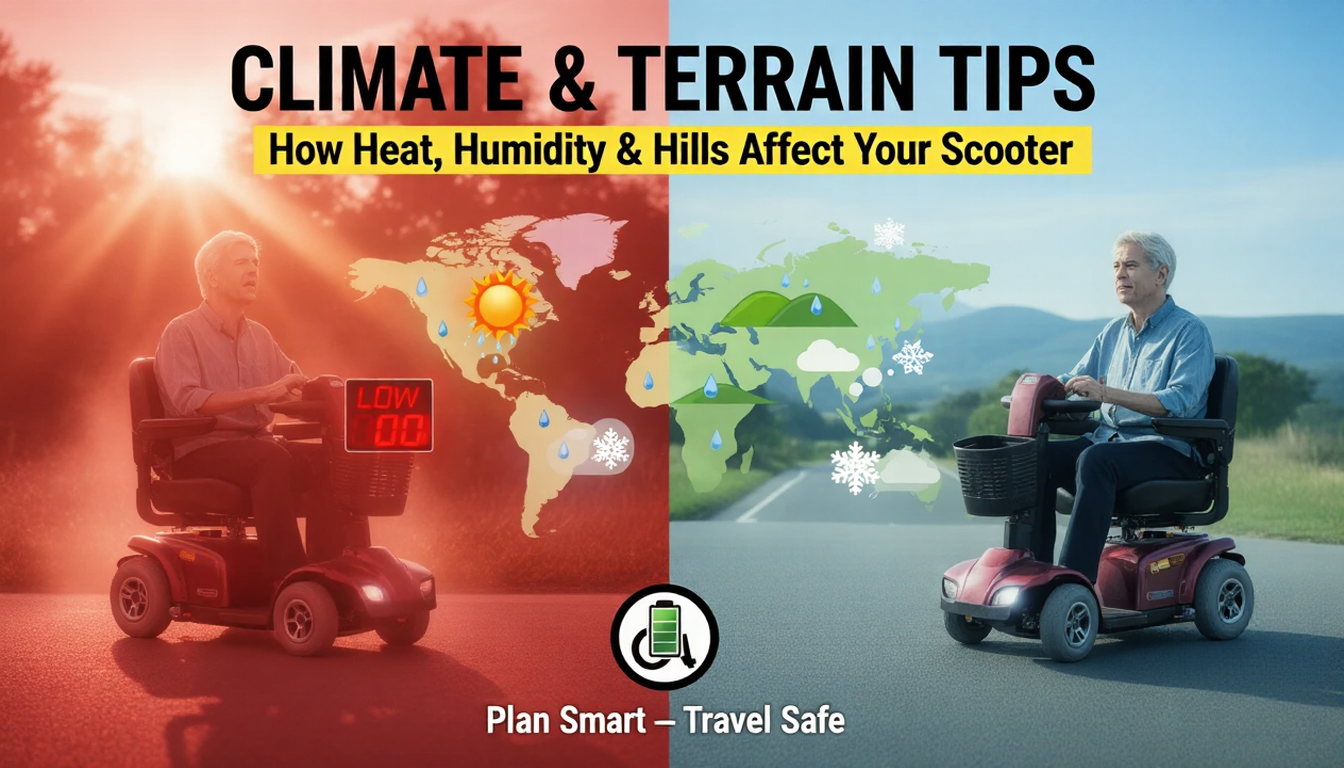
Climate Considerations: How Heat, Humidity and Terrain Affect Mobility Scooter Use — and How to Plan Accordingly
Hey everyone, Andy Wright here from Andy Wright Travel!
After travelling to quite a few countries on my power scooter, I’ve learned that climate and terrain can make or break a trip. What works perfectly in cool, flat Britain can become a nightmare in the heat of Thailand, the hills of Portugal, or the humidity of Florida.
In this detailed guide, I’ll explain exactly how heat, humidity, and different terrains affect your scooter or powerchair — and give you practical strategies to plan safely and enjoyably.
1. Extreme Heat & High Temperatures
How heat affects your equipment:
- Lithium batteries lose efficiency above 30°C and can overheat or reduce range dramatically above 35°C.
- Tyres become softer and wear faster on hot roads.
- Motors and controllers can overheat and go into thermal protection mode (sudden loss of power).
- Plastic components and seat cushions can become uncomfortably hot.
How heat affects you:
- Increased fatigue, dehydration, and risk of heat exhaustion — especially if you have reduced sensation or can’t sweat properly.
- Medications (e.g. for MS or Parkinson’s) can be affected by heat.
Planning tips for hot climates:
- Travel in early morning or late afternoon when temperatures are lower.
- Choose scooters with good ventilation and larger battery capacity.
- Carry extra water, cooling towels, and a portable fan.
- Book accommodation with air-conditioned accessible rooms and reliable charging.
- Use sunshades, wide-brimmed hats, and UV-protective clothing.
Real example: In Bangkok (often 38–40°C with high heat index), I reduced my daily range by nearly 40%. I now always book hotels with ground-floor rooms and shaded paths.
2. Humidity – The Silent Problem
High humidity (common in Southeast Asia, the Caribbean, and parts of Southern Europe) causes:
- Faster corrosion on metal parts and connections.
- Reduced grip on tyres — especially dangerous on tiled or marble floors.
- Sweat and discomfort — leading to skin issues and pressure sores.
- Fogging on controllers or displays.
- Faster battery drain due to the extra effort needed to move through moist air.
Solutions:
- Choose scooters with good IP (Ingress Protection) ratings for moisture resistance.
- Carry silica gel packs and regularly clean contacts.
- Use anti-chafing products and breathable seating cushions.
- Plan indoor activities during the hottest, most humid parts of the day.
3. Terrain Challenges
Hills & Slopes
- Most mobility scooters struggle on slopes steeper than 8–12 degrees.
- Check manufacturer specs for maximum gradient.
- Always approach hills slowly and use hill-assist features if available.
- In places like Lisbon, Santorini, or the Amalfi Coast, you may need specialist transport or adapted tours.
Sand & Beach Access
- Standard scooters sink immediately in soft sand.
- Look for beach wheelchairs or all-terrain mobility aids (e.g. Tracked Beach Wheelchairs).
- Many destinations (e.g. parts of Spain, Australia, and Florida) offer free beach accessibility schemes.
Snow, Ice & Wet Conditions
- Reduced traction and braking distance.
- Battery performance drops significantly in cold weather.
- Use winter tyres or snow chains designed for mobility equipment where available.
Cobblestones & Uneven Surfaces
- Common in historic European cities.
- Choose scooters with larger wheels (at least 30cm/12 inches) and good suspension.
4. Andy’s Climate & Terrain Planning Checklist
- Research average temperatures, humidity, and rainfall for your travel dates.
- Use Google Earth or street view to check routes and terrain in advance.
- Contact local disability organisations or accessible tour companies.
- Book vehicles and transfers suitable for your scooter’s weight and dimensions.
- Pack climate-specific items: cooling gels, extra batteries, waterproof covers, and sun protection.
- Adjust daily distance expectations — hot/humid days often mean 30–50% less range.
- Consider travel insurance that covers mobility equipment in extreme weather.
5. Destination Climate Quick Guide
- Mediterranean (Spain, Greece, Italy): Very hot summers. Best in spring or autumn.
- Southeast Asia (Thailand, Vietnam): Hot + very humid. Plan for shorter days out.
- USA (Florida, California): Varied — watch for hurricanes in summer.
- Northern Europe: Cooler but wet and sometimes cobbled.
- Australia: Extreme heat in summer — many places close attractions during heatwaves.
Final Thoughts from the Road
Understanding climate and terrain is just as important as booking accessible hotels. The right preparation lets you focus on enjoying the trip instead of fighting your environment.
I’ve created a free Printable Climate & Terrain Planning Checklist with temperature charts, packing lists, and destination-specific tips. Grab it from the link at the bottom of this page.
Have you faced any climate-related challenges on your travels? Share your tips or horror stories in the comments — I read every single one and often turn the best advice into future videos.
Stay cool, stay safe, and travel smart, Andy Wright, Wheelchair traveller, vlogger & accessibility advocate